
 It’s & We’re Always Open!
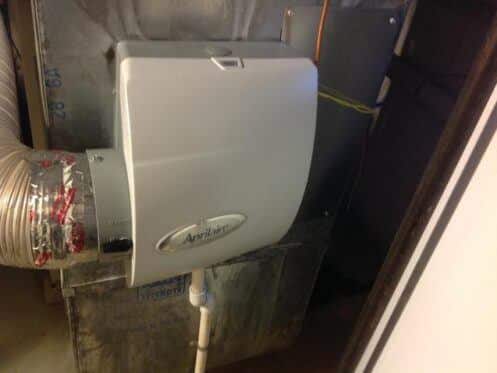
It’s common to wake up with a scratchy throat or an irritated nose during winter. Some people find it difficult to breathe. As temperatures drop, the air naturally gets dry and crisp as it loses its ability to hold moisture. The only thing you can do to combat this dryness is to add water vapor to your home’s atmosphere. That’s exactly what a whole-home humidifier is designed to do.
Understanding Whole-Home Humidifiers
A whole-home humidifier is a device integrated directly into the heating system, adding moisture to the air as it circulates through the ductwork. Unlike portable units that only treat one room at a time, whole-home humidifiers deliver consistent comfort to every conditioned area in the house.
How Whole-Home Humidifiers Work
Whole-home humidifiers work by adding moisture to the air. However, the way they achieve this differs by the type.
Bypass Humidifiers
A bypass humidifier is installed on the supply plenum or return air duct of your HVAC system. It relies on the system’s airflow to draw warm air across a water panel (evaporator pad) inside the heating equipment.
This system takes advantage of warm air’s higher capacity to hold moisture. As heated air passes through the panel, it evaporates the moisture on the panel. The evaporated moisture (water vapor) then mixes with the warm air before being evenly throughout your home.
Power Humidifiers
Power humidifiers operate much like bypass units but include a built-in fan. This fan actively pushes air across the water panel, allowing the system to generate humidity without relying solely on the furnace blower.
Because of this added airflow, power humidifiers can deliver more moisture output and are often more efficient in homes with higher humidity demands. Note, however, that the air handler or furnace must still run. The fan in the humidifier isn’t sufficient to circulate air through the evaporator pad.
Steam Humidifiers
Bypass and power humidifiers rely on heated air from your HVAC system to evaporate water from the panel. Steam humidifiers work differently. Instead of using airflow, they boil water to create steam, which is then injected directly into the ductwork. This method provides precise humidity control and makes it possible to combat dryness even when the furnace isn’t running.
Considerations When Choosing the Best Type for Your Home
The first factor to consider is the size of your home. If you have a relatively small house, a bypass humidifier can work efficiently. However, if you have a large home with 2,000 square feet or more, you’ll need a power or steam humidifier. They are better equipped to deliver the higher moisture output you need to maintain consistent humidity across expansive living spaces.
Another important consideration is access to hot water. Warm or hot water evaporates more easily, improving the efficiency of bypass humidifiers. If your water heating system can supply hot water to the humidifier, a bypass or power unit may be a practical and cost-effective choice. Without hot water access, however, a steam humidifier will perform more reliably.
You should also think about installation and maintenance requirements. Bypass units are simpler and less expensive to install but require the furnace fans to always be on for effective operation. Power humidifiers add flexibility with their built-in fans; however, they consume slightly more energy. Steam humidifiers provide the most precise control but come with higher up-front and maintenance costs.
Signs That Your Home’s Humidity Is Too Low
A dry home is a hazard not only to the occupants but also to your valued property. These are some common signs of low humidity.
Dry Skin and Brittle Hair
Skin is soft and smooth because it contains water. It needs this water so much that it produces its own protective layer, called hydrolipidic film, which is a combination of sweat and sebum (oil). This film prevents moisture in the skin from evaporating while protecting against harmful chemicals and germs.
Dry air, especially dry warm air, can strip your skin of its moisture. When humidity is too low, the hydrolipidic film will struggle to form properly because one of its main components, sweat, is reduced. As a result, your skin will become dry, flaky, and more vulnerable to irritation, infections, and damage.
Dry air also affects hair. Low humidity draws moisture from hair strands, leaving them brittle and prone to breakage. You may notice several split ends and an overall dull appearance of your hair.
Irritated Eyes, Nose, and Throat
Low humidity also strips moisture from your eyes and the delicate membranes of your respiratory system. Just like skin, these tissues rely on adequate hydration not only for proper functioning but also as a protective barrier against irritants, allergens, and germs.
When the air is too dry, the mucous membranes in your nose and throat lose their ability to trap dust, pollen, and microbes effectively. This can lead to scratchy or sore throats, dry and irritated nasal passages, and flu-like symptoms.
Your eyes will get excessively watery as a reactionary response to compensate for moisture loss on the surface. At the same time, they’ll feel itchy and fatigued. Prolonged dryness can cause vision problems, and in severe cases, vision loss.
Static Electricity
Another clear sign of low humidity is the frequent occurrence of static shocks. When the air is too dry, it cannot conduct electricity well, which means charges will build up on surfaces. So, when you touch anything, including clothes, doorknobs, or other people, you’ll often experience an annoying jolt of electricity.
While static electricity is mostly a nuisance, it can cause serious problems. Sensitive electronics may be damaged by repeated shocks, and static sparks could ignite flammable substances, creating a fire risk.
Damage to Wood and Furniture
Wood is highly sensitive to changes in moisture. When the air is too dry, it can shrink, crack, or warp. Your floors, furniture, guitars, violins, and pianos are especially vulnerable. Low humidity can compromise their structural integrity, appearance, and performance.
Reasons Why a Whole-Home Humidifier Is the Best Solution for Low Humidity
Investing in a whole-home humidifier is highly recommended for combating low humidity levels in a house during winter. This is because it ensures that every conditioned space in your home receives balanced moisture. In other words, better protection for your property, consistent comfort, and healthier living conditions.
It also reduces the strain on your heating system. Dry air loses heat quickly because it has a lower specific heat capacity, meaning it doesn’t take much energy for it to lose or gain heat. Moist air, on the other hand, has a higher specific heat capacity, which allows it to retain warmth longer since it takes relatively more energy to change its temperature.
Your heating system won’t cycle as often, and your home will feel warmer even at slightly lower thermostat settings. Moreover, your air quality will significantly improve as balanced humidity helps reduce dust circulation, allergens, and respiratory irritants.
Contact Pipe Works Services for More Information
Improve your health, comfort, and overall quality of life by installing the best whole-home humidifier for your house. Consult Pipe Works Services for expert guidance on device selection, installation, and ongoing maintenance. We are a family-owned and -operated business with over two decades of providing exceptional HVAC services.
Call Pipe Works Services today for whole-home humidifier installation in Chatham.