
 It’s & We’re Always Open!
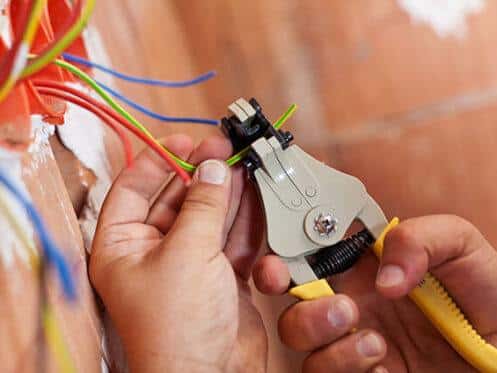
Thousands of fires each year are traced to unsafe electrical wiring in homes. Many electrical wiring issues develop over time due to issues like overloads and melting insulation. Knowing how to identify a wiring problem is critical to home electrical safety.
Visual Indicators of Trouble
The good news is that there are several ways to visually identify potential issues with electrical wiring. You will want to pay attention to the appearance and operations of your home’s outlets, lights, and electrical panel.
Discoloration of Outlets or Switches
Most modern outlets have plastic covers, and the typical plastic material doesn’t hold up well to even a small increase in heat. That is a good thing in this case because it means you can often see the discoloration of the plastic around an outlet or a switch panel. A loose electrical connection inside the outlet or switch will lead to greater electrical resistance, which in turn produces heat. As the temperature inside the outlet or switch approaches 200°F, it is more likely to discolor the plastic.
You will usually see a brown or black mark on the panel. The outlet is also likely to be warm to the touch, especially if something is plugged in.
Flickering or Dimming Lights
Your home’s lights are sensitive to changes in the electrical system. Consequently, they may dim when other systems are overloading a circuit or even the main electrical panel. For example, the light over your washing machine might dim when the washer initially starts its cycle. This is a sign that the circuit is overloaded.
If you see dimming or flickering lights in several rooms, especially when a big appliance starts, there is a good chance the issue is an electrical panel problem. One of our electricians can test the capacity. Depending on the situation, the solution may involve adding more capacity via a breaker or a new panel. If the system needs a new breaker, rewiring is likely also going to be necessary to ensure there’s enough insulation for the extra load in the line.
Scorching
Most scorching related to electrical issues appears near the outlets, switches, or electrical panel. You may also see melted wiring near the connections. Sometimes, a circuit breaker can melt, too.
Scorching is a bad sign. If it appears to be isolated to a particular circuit, turn off the related breaker. Turn off the entire panel if the panel seems to be the source.
Smells and Sounds
You can also sometimes detect electrical wiring problems based on smells and sounds. This is usually due to arcing, which occurs when electricity is trying to overcome a gap in a connection or a wire.
Buzzing, Sizzling, or Popping Sounds
Some arcing electrical systems can be noisy. Buzzes, sizzles, and pops are associated with electrical wiring problems. For example, you might hear a sound from a light fixture right after you flip the switch. If this happens, turn off the fixture and also turn off the breaker for that circuit on the panel. You may need to turn off the main breaker if there are signs of an electrical panel fire.
Acrid Smells
The heat from a damaged wire or other pieces of electrical hardware can cause plastic and insulation to melt. The chemicals inside these materials often have a distinctly acrid smell. If you pick up this smell, you should suspect your home’s wiring. This may be the only sign that something’s wrong with the wiring inside a wall or ceiling.
Repeated Circuit Breaker Trips
Your home’s circuit breakers are one of its main defensive lines against an electrical fire. Circuit breakers can trip for lots of reasons, and not all of them are related to wiring. However, an overloaded circuit should trip the breaker consistently. For example, homeowners often use electric space heaters as supplemental heating during the winter. The draw of even one electrical heater can be enough to overload a basic 15-amp circuit, the type that’s common in many living rooms and bedrooms.
Especially if a specific breaker keeps tripping, the odds are good that something in the circuit is buggy. There could be too many devices pulling too much power simultaneously on the circuit. Likewise, wiring damage can cause a circuit breaker to trip. Our electricians can test the circuit and determine if repairs or modifications to the wiring are necessary.
GFCI Trips
Ground-fault circuit interrupters (GFCI) are a special type of outlet that detects whether electricity is unexpectedly flowing outside of the expected circuit. You will see GFCIs most commonly on outlets around sinks and also outside walls. Their most typical use is detecting whether the circuit has come into contact with water, such as when someone accidentally leaves a hair dryer too close to a sink.
GFCIs act similarly to circuit breakers. They cut off power to the outlet whenever there’s a fault condition. However, they can stop working correctly due to age and corrosion. Also, a poorly sealed outlet can allow water to get into the socket or connection, causing the GFCI to trip. If you see repeated GFCI trips when nothing is plugged in, they likely need to be replaced.
AFCI Trips
Arc-fault circuit interrupters (AFCI) sound similar but serve a distinctly different role. An AFCI detects when the current inside the circuit has become unstable. This can happen when a homeowner drives a nail into a wall and accidentally hits a wire. For this reason, we often install AFCI systems in places like living rooms and bedrooms. Whether it’s due to age or wiring damage, you always want to take a persistent problem with an AFCI seriously.
Dead Outlets or Light Sockets
Wiring damage can lead to a dead electrical outlet or light socket. You want to check the breaker for the specific circuit to make sure it hasn’t tripped. If the breaker is active and there still isn’t power to the outlet or socket, then there could be a loose connection or wiring damage.
You can purchase outlet and socket testers at your local hardware store or online. They are very handy for checking connections, voltage, and even grounding.
Multiple Issues
Homeowners should be especially attentive to multiple electrical issues. A modern electrical system shouldn’t display any signs of trouble if it’s in good condition. If you’re encountering dead outlets, flickering lights, and circuit breaker trips all at the same time, for example, then there could be a major safety issue that calls for a more intense electrical inspection.
Pipe Works Services is here to deal with a wide variety of indoor and outdoor electrical concerns. Our electricians would be glad to inspect wiring, circuit breakers, panels, outlets, and lights. People in Chatham, NJ and other parts of Northern and Central New Jersey trust us to keep their home electrical systems safe. We base all our advice on decades of experience, and all our work comes with a 100% satisfaction guarantee.
If you have a home in Chatham that has electrical wiring issues, contact Pipe Works Services right away.