
 It’s & We’re Always Open!
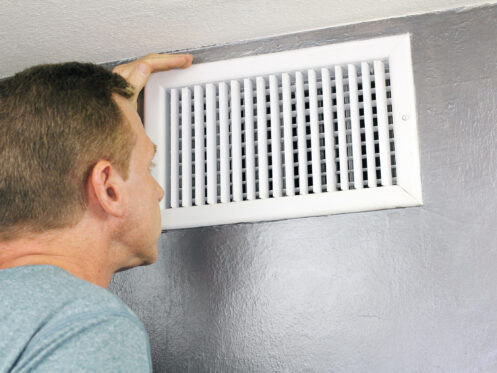
You set the thermostat, hear the unit kick on, but the air coming out isn’t cool, or doesn’t feel like it’s doing much at all. This situation can make your home uncomfortable fast and drive up your power bill at the same time. At Pipe Works Services, in Chatham, NJ, we’ve helped plenty of homeowners figure out why their AC is working hard without the payoff.
Thermostat Settings
Sometimes, the problem starts with something small you might not notice right away. Your thermostat could be set to “on” instead of “auto.” That little switch changes how your system behaves. When it stays on, the fan runs constantly, even when the compressor isn’t cooling the air. You’ll still hear airflow, but the temperature won’t drop.
Another setting that trips people up is the temperature differential. If your thermostat allows fine-tuning, it may be keeping the system from kicking on until the temperature rises more than you’d expect. Even the placement of your thermostat matters. If it sits in direct sunlight or too close to a warm light fixture, it may read higher than the actual room temperature. That prevents your AC from cycling as it should.
Air Filter Problems
If air can’t move easily through your system, it can’t cool your space well either. A clogged air filter limits airflow, forcing your system to work harder for less payoff. You might hear the fan running, but the cooled air barely makes it into your rooms. In some cases, a clogged filter can even cause the evaporator coil to freeze, which blocks airflow entirely and turns a small issue into a larger repair.
If you’ve just moved in or can’t remember when the filter was last changed, it’s a smart place to start. Pull it out and hold it up to the light. If you can’t see light through it, it’s too dirty. Even if the filter appears fine, a poor-quality one may not be providing much assistance. Filters vary in strength, and not all of them trap the same particles.
Coil Could Be Frozen
A frozen coil doesn’t look like a summer problem, but it happens more often than you’d think. Your AC relies on a cold evaporator coil to draw heat from your indoor air. If that coil gets too cold or loses airflow, condensation can freeze around it. Once that happens, the ice acts like a barrier, and the coil can’t absorb heat anymore. The system might continue to run, but it won’t cool anything. You might notice weak airflow from the vents or water pooling around the indoor unit once it thaws.
A frozen coil often ties back to airflow issues like clogged filters, blocked vents, or duct leaks. It can also point to low refrigerant levels, which drop the pressure and allow the coil to freeze. If you spot frost or ice on the coil or nearby lines, turn the system off and let it defrost before doing anything else. Running it in that state only makes things worse.
Low Refrigerant Changes Everything
Refrigerant carries the heat from inside your home to the outside. If your system has a refrigerant leak, it can still run, but it won’t move heat effectively. That leaves the air feeling warm, no matter how long the unit stays on. Low refrigerant also puts extra stress on the compressor, and if it runs too long in that condition, it risks a complete failure.
You won’t see refrigerant leaking the way you’d notice water. It evaporates quickly, and the lines are sealed, so the loss isn’t always obvious. Instead, you’ll notice signs like longer cooling cycles, ice on the lines, or warm air at the vents.
Adding more refrigerant won’t fix a leak either. The leak has to be found and sealed first by an AC repair technician. If your system seems to cool fine one day and struggles the next, especially on hotter afternoons, a refrigerant issue could be the root cause.
Your Ductwork Might Be the Culprit
Even if your AC is running well, the cold air still needs a clear path to reach your rooms. If that path has leaks, blockages, or poor insulation, you’ll feel the difference. Ducts hidden in walls, attics, or crawl spaces often go unchecked for years. Gaps at the joints, crushed sections, or tears in the lining let cold air escape before it reaches your living space. You’ll hear the system running and might even feel a breeze, but the room won’t cool the way you expect.
Some parts of your home may feel fine while others stay cold. That kind of uneven cooling usually connects back to duct problems. Dust, insulation fibers, or even small animal nests can block sections of the duct, especially if the system has sat unused for a while. A duct inspection can show you where the pressure drops and help identify hidden weak spots that steal your comfort.
Dirty Condenser Coils on the Outdoor Unit
Your outdoor unit releases the heat pulled from inside your home. When the coils outside get caked in dirt, grass clippings, or pollen, they stop working the way they should. The heat gets trapped, and the refrigerant can’t cool down properly before cycling back indoors. That keeps your system running longer and struggling harder to meet the same set temperature.
You might not think much about what sits outside, especially if it’s behind the house or hidden by landscaping. But those coils need open space and clean surfaces to release heat. You don’t need to take anything apart to help.
A quick visual check can show if the fins look clogged. Rinsing the unit gently with a hose can knock loose dirt without damaging anything. If the coils still look dark or matted, a deeper cleaning might be needed.
The Blower Fan Might Not Be Pulling Its Weight
The blower fan inside your system pushes air through your ductwork. If it’s not working right, your system can still cool the air, but that air won’t reach the rooms. A weak fan might turn slowly due to dust buildup, worn belts, or electrical issues. In some cases, the motor starts to fail and can’t keep the speed needed to move air evenly.
You might notice that the airflow feels weak from every vent, even though the system sounds like it’s on. Or you may hear odd noises coming from the air handler cabinet. A stuck fan might hum but never spin, which keeps cooled air trapped at the source. If your system ran fine one day and seems to blow less the next, the blower could be the missing link.
Your System Could Be Too Small or Just Tired
If your AC was never sized correctly, it might not have the capacity to cool your home once temperatures climb. It can run constantly without catching up, especially in the late afternoon or early evening when heat builds inside. A system that’s too small for your square footage, window layout, or insulation level will always fight an uphill battle.
On the other hand, if your system is more than 10 years old, the wear might be catching up to it. Compressors lose strength, motors slow down, and performance drops without a clear warning. Age and sizing problems aren’t quick fixes, but they explain why your system runs without relief.
Solve Your AC Problems Today
When your AC seems to be running but doesn’t cool your space, the fix could be as simple as replacing a filter or as serious as repairing a refrigerant leak. We also offer air conditioner maintenance, ductless mini-split installation, and home energy evaluations. Knowing where to look first makes a frustrating issue easier to manage.
If you’re ready to stop guessing and get answers, call Pipe Works Services for expert help today.